Verve's Bollywood Style Awards 2012

Published: Verve Magazine, Features

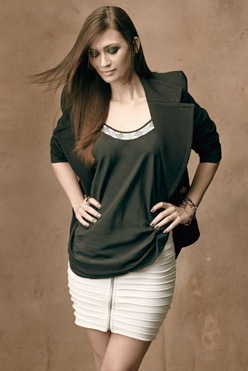
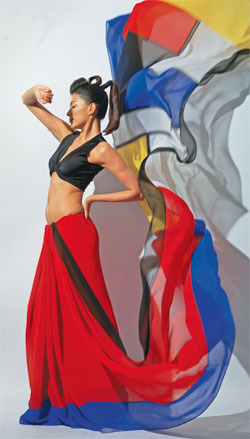
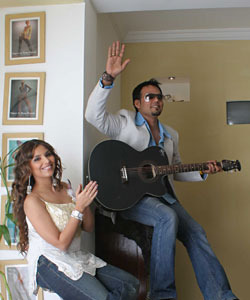
Indian cinema has proven with its recent offerings that it can confidently step up to the plate and serve style that matches the character and mood of the movie rather than cook up a half-baked stew of fashion and metre. As Verve pointed out last year, couture has found a definite place in Indian cinema, whether through a subtle pair of designer shades or through a statement handbag. The good news is high fashion isn’t being used as candy floss on the big screen – it’s playing a specific role. Costumiers are equally willing to turn to village threads for authenticity, or design garish, bordering-on-the-vulgar outfits for a real-life character, as they are to doll up their actors in an international label. While there may not be any path-breaking moves here, costume design 2011 has been authentic, stylish and character-oriented. It sets the stage to push the envelope further, away from the sensationalist and dysfunctional ensembles of the past. Sitanshi Talati-Parikh picks out four movies that impressed with their true-to-the-grain styling, and Verve recreates these looks with young actors Sarah Jane Dias and Sahil Shroff.


AUTHENTIC RECREATION: MAUSAM

Lovleen Bains for Sonam Kapoor and Shahid Kapoor

Mausam01
For the clothes to take a backseat for a change and let real-life fashionista Sonam Kapoor’s character shine is no easy feat. Playing a simple Kashmiri refugee in Punjab, she faces Shahid Kapoor, a small town boy, in Mausam. You find the costumes hold their weight in their sheer subtlety – from the gaucheness of Shahid’s college blazer to the sophisticated tailoring of his air force pilot outfit; his character transitions in the very seams. Sonam’s transformation from youthful girl to a mature woman is rooted in her ethnicity: even as she dons international garb when living abroad, the Anamika Khanna-crafted red gown worn in Scotland has Indian embroidery on it, and the Kashmiri embroidered shawls are reminiscent of her Indianness.

Shades change with seasons and locations: the young lovers’ innocence is portrayed with the use of whites and creams in a wintry Punjab, picking up earthy hues along the way, through geographical displacement and character maturity. For instance, Sonam’s pale Kashmiri kurtas and dupattas soon reflect the happier shades of Punjab. When the characters meet again, in the church in Scotland, they are both, once more, in white. “Colour is almost a leitmotif in the film,” says Bains. Intentionally imperfect hand-stitching on Shahid’s college blazer, ageing of clothes to show wear, a fixed wardrobe with repetitions (Shahid had one pair of jeans through the first season except for the song sequences), researching the right length for Sonam’s kurtas, having Shahid’s sweaters woven by Punjabi village folk over gossip sessions and sarson ka saag, there is a thread of authenticity and rootedness in Lovleen Bains’ costume design of Mausam that is devoid of the trappings of Bollywood sensationalism.


URBAN SASS: ZINDAGI NA MILEGI DOBARA

Arjun Bhasin for Hrithik Roshan, Farhan Akhtar, Katrina Kaif, Abhay Deol and Kalki Koechlin

Znmd04
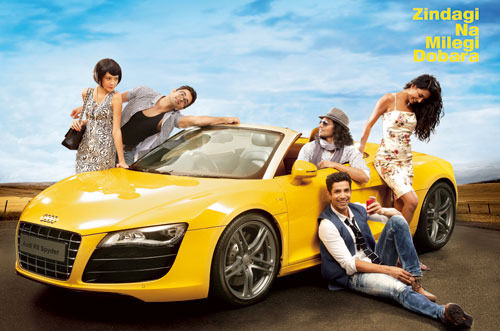
If last year’s Aisha had Dior handbags floating on every arm, 2011’s ZNMD makes ‘Bagwati’ a character – with her own position in the plotline. And the ostrich Hermes Kelly is styled with shades and a scarf occasionally, when the weather requires it. This is probably the first time fashion is used as a plot device in Indian cinema – an obvious barb at Kalki Koechlin’s prissy couture- conscious Natasha. Her blunt cut with sharp bangs, kitten heels, Chanel jacket and designer-everything says more than the pinched expression on her face ever could. The look is reminiscent of Molly-Ringwald-in-Pretty-in-Pink – except that unlike Ringwald’s second-hand, hand-stitched attire, Koechlin/Natasha’s clothes are an expensive combination of fresh-off-the-ramp and couture classics. In sharp contrast – as each character forms a fashion foil to the other – Katrina Kaif’s easy-going Laila philosophises in flowing dresses and tresses, easy-breezy beach wear and minimal makeup. Even a basic transformation into biker-chick requires her to wear a lightly ruffled-edged corset over jeans, always feminine and sexy.

With the boys, each actor’s personal tastes and style are visible. Abhay Deol has a naturally leggy, geeky look. The design takes it a step further for his character, Kabir, with over-the-top nerd spectacles, quirky shirts – think birds-taking-flight – teamed up with sneakers and a backpack that he hoists defensively when grilled about his life’s choices. Hrithik Roshan’s beefy look is toned down with buttoned shirts as the audience can’t be allowed to question how Arjun, a work-obsessed investment banker finds time to go to the gym while ignoring his girlfriend. (Of course, the toned shirtless body on the hoardings makes for a happy box office draw.) As the story unfolds, he loosens up, and so do his hair and styling. Farhan Akhtar is pushed further into a character scripted for him: quirky, philosophical poet, entirely boho chic. Aviator shades, loose pants, kurtas and long-sleeved t-shirts teemed with a random neck scarf and hat that he sports, on occasion, even outside the film.

Every look comes together cohesively, billed directly to director, Zoya Akhtar’s vivid visualization and stylist Arjun Bhasin’s recreation: detailed character-oriented styling and couture that slides into everyday life. We just wish it could’ve been a little more experimental – there is no room for a subtle overflow like a preppy artist, for instance. While ZNMD’s picture-perfect styling serves to
perpetuate stereotypes rather than demolish them, it does so rather appealingly.


YOUTH CULT: ROCKSTAR

Aki Narula for Ranbir Kapoor

Rockstar01
Polish artist Grzegorz Domaradzki set the stage with his poster sketch of Rockstar. You couldn’t help but know that the look and performance would be iconic and the movie didn’t disappoint – at least on those counts. Tight-assed Janardhan (Ranbir Kapoor) in his too-fitted jeans, too-snug sweater, too-crisp shirts and too-short hair is an obvious exaggeration to the transformation that becomes rock star Jordan. Free of inhibitions and full of angst, Jordan dresses exactly the way he feels – unfettered, irreverent, defiant and often unwashed. As he moves to his own tune, treating societal norms, business conventions and geographical boundaries in the same dismissive manner that he does anything that comes in the way of his single-minded vision, he becomes an unwilling anti-authoritarian cult figure. And to that effect, he redefines the Nehru cap as a fashion ploy. Even as detractors and politicos may shift uneasily, Kapoor makes it work.

What stand out are his wardrobe staples (often repeated in the film for realistic styling): the snazzy anti-establishment military jacket, the Qawwal jackets – a call to his Sufi leanings, the mocking feather-topped Sadda Haq police shirt, all teamed with the clever individualistic version of loose patiala pants and kurtas – ultimate comfort wear. Love the fact that there is no leather or biker rock look – so often over done and stereotypical. What impresses is the refreshing take on a rock star. Packaged with Kapoor’s long, unkempt hair, accessorised with a chain around the neck that houses his first broken guitar string and guitar pick along with other souvenirs, Aki Narula, director Imtiaz Ali and Ranbir Kapoor have visualised possibly the iconic look of the year, to be imitated and popularised by young college kids until the next grunge look rocks its way in.


RETRO RENDERING: THE DIRTY PICTURE

Niharika Khan for Vidya Balan

Tdp04
Even before the film released, Vidya Balan’s bosom encased in Niharika Khan’s suggestive designs made for feverish conversations and post the film’s release, one hears of ‘Ooh la la’ saris becoming popular commercially. If Vidya Balan has the mettle to take on an author-backed sensational role of this kind and further it with panache, then Khan has done more than her job to ensure that Balan’s character stays suitably unclothed throughout. For the racy protagonist, the costumes of the ’80s south are garish, loud and boldly uncouth – as the script intends it. The camera makes love to Vidya Balan’s unfettered body, and the clothes caress her intentionally untoned figure: you watch Balan attempting to button up her jeans over her flabby stomach with an enviably unconcerned attitude towards her generous midriff.

From the tight short dresses, the pelvis-hugging flared pants, to the cleavage-baring cholis and retro shirts, everything shrieks for attention. Where Bobby’s Dimple Kapadia and Once Upon a Time in Mumbai’s Prachi Desai conveyed youthful, shy sensuousness with their midriff baring, polka-dot front-tie shirts, Balan is unabashedly lusty and in-your-face with her wantonness in similar outfits. And yet, caught in a moment of vulnerability, Balan’s character, Silk, makes the walk of shame the morning after being dumped for the wife, attempting to shrink into the folds of her red sequined gown; but in the harsh morning light, it’s too tight for comfort or respect.

Ironically, for Silk, it’s all synthetic and the glitz of sequined make-believe. From the dull, aged South Indian cottons of Reshma’s village wear, and the lamé and brightness of Silk the superstar, to the unflattering wardrobe of an alcoholic, the clothes define every turn in the script. As Khan points out, “The film is about the character’s relationship with her clothing and body – and Balan is brave, far braver than even I could be, to take on this role.” These are the clothes of a woman whose attitude speaks more than her wardrobe, and her wardrobe merely perpetuates her freewheeling attitude. Whether Silk tries to hide or take the world in her stride, her clothes reveal her spirit and character – loud, brash, irreverent, attention-seeking, ambitious and vulnerable – and always exposed.

The Character of Style

Verve Magazine, Nerve, Fashion, May 2010

So haute couture is escapist fare for the masses and a note on what not to buy (since it’s too popular) for the fashionistas. Books, movies and TV serials get rank popularity because of the sequins and stilettos touted by their characters

A little discussion about the haute couture ways of popular women’s fiction led to the realisation that fashion is actually a real-life character, if not a protagonist, playing a very integral role in the lives of the others. So is the stylish drama about Manhattan’s scandalous elite, Gossip Girl, about Serena van der Woodsen and Blair Waldorf or is it about the clothes? Can you take in Serena and Blair’s striking good looks when you are busy gaping at the beautiful clothes they wear? Chuck Bass’ three-piece suits, bow ties and mirror-polish shoes are all telling you more than the actual person himself. Relationship make-ups comprise of receiving fabulous clothes in lovely big boxes. It’s not so much make-up sex as make-up sexy. Not surprisingly the fabulous ‘fashion show’ spawns off a whole bunch of shorts: Gossip Girl Couture, Gossip Girl Revealed, Gossip Girl: Faces Behind The Design, Stylish Confessions: The Fashions of Gossip Girl.

In much the same way that Sex and the City set the trend for Manolo Blahniks and Jimmy Choos to be the point of most conversation, the icing on the foot was when in SATC: The Movie, Mr. Big goes down on one knee with no ring, but a brand new Manolo in hand, and proposes. Carrie accepts, of course, and with evident pleasure slides her slender foot into the proffered Blahnik.

In Confessions of a Shopaholic, Rebecca Bloomwood is obsessed with the art of fashionable and pocket-burning shopping and to be honest, she truly falls in love with Luke Brandon when she discovers that he ‘speaks Prada’ even if adorably reluctantly. Not to forget that the pleated green scarf that started the whole relationship (and led to her being the famously anonymous ‘The Girl With The Green Scarf’) was auctioned off by credit-squashed Rebecca and salvaged by Luke and returned to her as a peace offering – a soft silky foundation to a long-lasting relationship. I mean can you love a man that doesn’t understand fashion and your love for it? Is it worth being in such a relationship that doesn’t include material indulgences of the best kind?

So, you discover that fashion now exists as a very necessary element in movies, books and TV shows. It’s not like it’s a new thing – the age of the Victorians and Romantics had their own characteristic dress elements: the cravat, the embroidered handkerchief twirled nervously, the beautiful hats entwined with ribbons, the gowns and the pearls. In fact the women, kept themselves entertained with notes, embellishments and comparisons on elements of clothes and accessories. The fact that fashion and more particularly brand names have now become hugely significant elements and often undeniably important to the viewing audience leads you to wonder what’s next? Movies are evaluated with the yardstick of their style-worthiness – people sat through SATC: The Movie (despite it being a weak cousin of the TV show) and loved it because of its high fashion elements; people ooohed and aaahed over the cinematic disaster Kambakkht Ishq because of the clothes, shoes and bags splashed across the screen. You often forget the movies, but you can’t escape the gorgeous fashion in them. It’s ominous, it’s morally unsound and deeply unsettling, but you can’t change the fact that the peep-toe stiletto, the bejewelled clutch and the silk scarf are as important (romantically) to a story as the people themselves. Sometimes even more so.

Trendsetting Strokes

Published: Verve Magazine, Nerve, May 2010

The connection between fashion and art is an old one; international trends can be written in no less than multiple coffee-table books. Verve speaks to four top Indian fashion designers who show obvious influences of art in their designs

WENDELL RODRICKS

Wendell
On the connect “There has always been a connection between art and fashion. Chanel loved Cubism. Schiaparelli loved Surrealism. And Yves Saint Laurent paid tribute to many artists: Braque, Picasso, Mondrian. Art and fashion are both provocative and often intrigue the general public.”

In my designs “I have used art as an influence not just from the Western world but also from an Asian perspective. I have collaborated with Goan artist Theodore Mesquitta; and did an installation for Habitat Centre (Alka Pande). In fact, I know one day I will paint.”

Fashion as a work of art “Fashion is at the lowest rung of the pure art ladder. Our clothes certainly are a form of art. To elevate them to pure art though is being overly ambitious. Fashion can become art in the hands of Alexander McQueen or Hussain Chalayan who look at clothing and shows as art to begin with. But in most cases, fashion is not art.”
   
SATYA PAUL

Satyapaul02

On the connect “Anything in life has two possibilities – either you can use it to raise or lower the bar. What matters is how one takes it. Fashion is itself an art form, a medium to be used to create amazing art. Broadly seen, it is a confluence of colour, texture and form (by way of weaving, embroidery, printing, and cutting/pattern making). The importance of the two is akin to asking ‘...the importance of oxygen to life?’”

In my designs “Art is anything done with heart! In that vein we have made numerous collections over the years where art of different artists, and movements of art is the basis. Recently, Chola period brozes and Pop art have been referenced in our collections. In addition, we have explored and developed a new visual language.

GAURAV GUPTA

Gaurav02

On the connect “Sure there is: fashion is simply commercial art.”

In my designs “I’ve always been inspired by art. Think architecture by Gaudi, movements like Surrealism, Dadaism, the art nouveau and art deco realisations. While it is nothing obvious and direct, there is a subconscious connect. Recently, I collaborated with artist Akshay Singh Rathore, taking off from his light-box installations. We’ve independently been working towards similar things – a more landscape-like feeling. Tartan checks can be rigid; with this concept, they became more fluid, draping well.”

Fashion as a work of art “Some of them are! Designs are sculpted around a body. Sculptures have a mood; and in fabric draping, construction and moulding, it is like working with clay. One of my saris for instance was displayed at the Portugal Biennale (an international art exhibition) late last year.”

POONAM BHAGAT

Poonam02
On the connect “Art and fashion are both intertwined. Both are highly creative fields. One uses a canvas with brush strokes or mixed media while the other uses fabrics and threads on cloth. The difference is, the latter is turned into a structured garment while the former is flat with sometimes a 3D effect. Artists have even started incorporating materials available to fashion designers in their art.”

In my designs “My spring summer 2010 collection was inspired by the works of world renowned Spanish artist Joan Miró, who was known for his very vibrant, childlike paintings and use of primary colours. I borrowed elements from his art and gave them my own TAIKA twist using vibrant appliqués and embroidery on ivory linens and cotton-silks. The recently concluded WIFW AW 10 showcased my collection inspired by abstract expressionism, a modern American art movement which took wing post World War II in the late ’40s and flourished till the early 1960s, putting New York on the global art map for the very first time.”

Designer in an art show “For me art speaks; so does fashion. The first ever group art show I participated in was organised by Polka Art Gallery at The Visual Arts Centre, New Delhi in August 2007. It was a showing of extremely eminent artists. I was the only fashion designer and the only one to create tapestries on fabric with embroideries.”

Designs as works of art “My designs are just fashion statements, to be worn and enjoyed. Not to be treasured!”

A Bag For All Times

Published: Verve Magazine, Features, August 2009

A designer bag is your chance to stalk up the social ladder. Sitanshi Talati-Parikh chats with brand consultant-turned-writer Radha Chadha about the cult of luxury

Chapter02
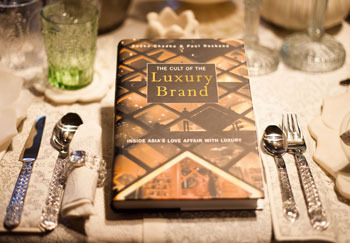
It isn’t easy to talk about luxury without moralising, particularly when you see girls ready to clobber each other with their Manolos to get their hands on 16 bags at 50 per cent off at the Gucci sale. I began wondering about the craze for luxury brands. Ironically, the answer arrived in the form of Radha Chadha and Paul Husband’s book The Cult of the Luxury Brand: Inside Asia’s love affair with luxury. Excerpts from an interview with Radha Chadha:

How did the love affair begin?
I went to Hong Kong in 1997, well before luxury brands had set up shop in India, not knowing much about them. I was fresh off the plane from India and couldn’t understand how my secretary could afford a Louis Vuitton bag! Working in an advertising agency, I invariably ended up dealing with luxury brand projects, and over a point of time I simply fell in love!

You talk about the ‘democratisation of luxury’ – isn’t that an oxymoron?
Yes it is! Most people associate the word ‘luxury’ with ‘exclusive’. The way luxury brands are marketed today, there is nothing exclusive about it. Take Japan – 94 per cent of women in their 20s have a Louis Vuitton piece. There is nothing exclusive about it in that society. When the access to luxury is there for whoever can bite into it (and luxury also becomes bite-sized), then there is democratisation of luxury.

Where is India going with luxury brands?
India has a lot of luxury, but we do not have too many global luxury brands. We have tons of potential luxury brands waiting to happen. Brands exist more in the head and heart – its all about how you present it to the world. India has yet to do that. Also, in India it is only the top end of the market that is shopping. As the Indian economy grows, the use of these products will also spread, as it has in every country.

Sex and the City, the movie, introduces the concept of renting a bag....
It’s true! What is also common is buying a bag and selling it at the same store. When the desire becomes greater than the pocket – that’s when this happens.

So, the bag is the new solitaire?
The solitaire says ‘I have got money baby’, but a luxury brand says ‘I’ve got money and a certain taste’ – it has a certain ability to express personality.

Why do people buy luxury brands?
Many people buy luxury brands for the sheer pleasure, for the quality…but in Asia I have found that people buy to prove their status in society. Almost all of Asia was poor at one point of time and had ways of marking status. Luxury brands have been around for ages, but the way they were marketed was very different. With the recognition that accompanies the right branding, luxury brands become status markers.

How did the book happen?
I have this burning desire to write. I study people, and luxury brands seemed like an interesting lens with which to study countries. It is such a rich subject – you can understand so much about human beings and behaviour and a country by the kind of things people over there do and what drives them.

Does art fall into the concept of luxury?
I have defined luxury brands arbitrarily in the book to limit the scope, as stuff on the body. So many other things like cars, condominiums, private planes, yachts and even art can fall into it. A lot of these artists are like brands (try telling them that, they will be offended!) but MF Husain is also a brand!

No Time To Preen

Published: Verve Magazine, Features, November-December 2005

Photograph: Akash Mehta

When Falguni married Shane Peacock, together they conjured up a funky treasure trove for the tired fashion victim. Sitanshi Talati-Parikh chats with the creative couple behind the flamboyant designer label, who work 24/7 and suffer from Sunday morning blues!

Fs1
The Juhu studio is warm and snug, tastefully embellished with touches that are all Peacock. Settling myself in on an olive love seat with golf motifs, I look expectantly at Shane Peacock seated across me on an animal print settee; he appears as reticent as he is known to be. The other half of the duo – Falguni Peacock – chirpy, bubbly and innately hospitable, bustles about attending to things while talking at breakneck speed.

They could be just any newly married couple, bickering good-naturedly over minor differences, suddenly quiet, otherwise talking over each other, and completely head-over-heels in love with their three-year-old budding fashionista daughter. The conversation flows over a coffee and then some tea.

Theirs is a fairy-tale story of how a self-reliant, salwar kameez-clad Gujarati girl came upon a pig-headed, Christian boy. Ironically, Shane, who was a member of a rock band, had always fantasised about meeting a ‘propah’ traditional girl who didn’t smoke, drink, or ‘go wild’, and there she was. But Falguni wasn’t easy to woo. With a delighted chuckle, she recalls how Shane once asked her out for coffee and told her to come wearing jeans. When the usually conservative dresser obliged, he knew he had won her over.

But conventional as she seemed, Falguni was a career woman through and through. Even before she got married, she had started her own clothing label and Shane, meanwhile had also studied fashion design. It was not long after their marriage that they pooled their talents into the flamboyant and unique Peacock brand.

Their success didn't come easy. Shane started college, studying engineering at the behest of his father, and Falguni who came from a background of chartered accountants and lawyers, was greeted with equal scepticism when she chose to become a fashion designer. In the end she settled for a Commercial Art degree to make her family happy but working in an ad agency only made her unhappy. Reminiscing, she says, "I told my father, in no uncertain terms, 'One day I will be a really famous fashion designer'. Unfortunately, my father isn't here to celebrate my success, but he would have been so proud."

Shane faced similar rebuke at home when his preference for spending his days sketching outside class was discovered. Horrified at the thought of his son becoming a "ladies tailor" or even worse, being gay, his father took him to task. The rebel in Shane sprung forth and he walked out on his family. Falguni interrupts, "It is really his live wire nature that got him to where he is right now."

Chasing those dreams, however, was easier said than done. He was forced to give up his indulgence - the rock band, he over-stayed his welcome at a friend's house by a year and jobs were not easy to come by. It was a while before he thought about doing something on his own.
Shane drags us back to the present. "Let's not talk about the past; it is only the present and the future which matter." With the slightest touch of regret but no resentment, he states thoughtfully, "If I had my family's support, I could have reached here faster. It is frustrating sometimes to think about the extra years I had to put in to get here." Immediately distracted by his daughter, noticeably the apple of his eye, he reflects on his relationship with her, "She calls me Shane - and I like that. Calling me 'dad' would put that extra distance between us, which I don't want."

Their marriage was the turning point of their personal and professional lives. When Falguni married Shane, together they conjured up a new vision for discerning dressers. Today 90 per cent of their business comes from the international market, and the Peacocks are a global brand. Ironically, it is the Indian market that they seem unsure of. Appreciative of the attention they have been receiving nationally, they still believe that India as an organised market has a long way to go. Shane explains that selling an outwardly simple outfit for the equivalent of Rs 40,000 abroad would be no problem at all; it would be valued for the style, the cut and the label. In India on the other hand, he states matter-of-factly, "People want their money's worth. A woman seeing a price tag of Rs 40,000 would ask for the piece to be heavily embellished so it looks like that much karigari has gone into it. Simplicity, which is really more my style, won't work as easily here as it does abroad, at the prices we retail at."

Falguni joins in by stating that they know their target audience, "We don't want anyone and everyone to wear our garments. We are very selective about our clients and our stores. It is the cream of the crowd that we cater to and as long as they appreciate our work, we're happy." She says they would rather sell limited garments than drive volumes. It quickly becomes clear that Falguni is the hard-nosed businessperson of the two. Shane seems to read my thoughts, adding, "Falguni is the more pragmatic of the two of us, she sees the commercial viability and makes those key business decisions." But they both agree that, "At the end of the day, you have to ensure that your work is commercial. You can't make a masterpiece that is admired but never worn. We want it to sell, but in our style and on our terms."

Shane strongly believes that talent alone was not the only deciding factor in their successes. Instead it is largely through smart marketing that they have been able to make themselves be seen and noticed. To promote their line, the Peacocks tried working with models, but were not happy with the results. They explain, "Models didn't provide a value addition. You can't identify with them, they don't seem entirely real. Spectacular garments can't be remembered for just that. So we decided to take on celebrities to build relevance." That eventually turned out to be quite a marketing coup. They look at each other and smile. Falguni continues, "We set about getting the people we wanted. It was not easy convincing Manish Malhotra, himself a very successful designer, but we managed the impossible. Rita Dhody's campaign was the most talked about. She is a flamboyant and sensual woman and epitomises glamour. Each person is very different and since we can't change the character and personality of each, we just take their image and make it even more attractive than it is. Nawaz Singhania's campaign was tuned into her personality; the lines were slightly more conservative, the look more accessible".

Shane reiterates, "We want even the most ordinary looking woman to look and feel beautiful in our clothes." As Falguni strides up to one of the racks and pulls out an outfit to demonstrate, Shane emphasises that they are known for their plunging necklines. That doesn't mean they don't make cover-up pieces like kaftans and such, but a large number of their designs carry their signature low necklines. "We cater largely to the kind of woman who is a lot more conscious today about fitness, health and fashion. Everyone wants to look younger and more attractive, and that's where our necklines come in," he laughs.

So what is their signature style? Clothes for the woman who is not afraid of going over the top. Shane deliberates and then says, "It's all still quite new and experimental for us. Four or five years down the line we'll know exactly what a Peacock piece is meant to look like." They know what's important to them, though: "Women feel slimmer and sexier in our clothes. We want a woman to show her feminine side, look like a woman, go slimmer on the waistline, let the garment flow, not be rigid. It will always be funky and distinctive."

They've been echoing each other's voices for so long, that I begin to wonder about any creative differences that they may have. "Oh, we fight a lot - on everything, but mostly work. We're both very independent and that is what brings us at loggerheads. But our differences just seem to resolve themselves." As Shane calls time out to talk to a friend about a trip to the Maldives, I wonder if taking time off from work helps stimulate creativity. "There are barely any holidays for us! We're always stressed, and all of our travel is work-related. At the most we take one day off to shop (Falguni by the way, loves to shop!). We just don't know what to do at a beach - it's almost too stress-free. A city is the perfect place for us, like New York." Pausing for breath, Falguni suddenly bursts into laughter and resumes, "Even on our honeymoon, in Kerala, we got bored and cut the holiday short!" Shane who finds most pleasure in spending time with his daughter Nian, adds, "Sundays bore us."

What about giving each other space, I ask. Falguni is quick to assert, "Even if we are together 24/7, we are still doing separate things." Shane joins in, "We handle separate factories." As a woman though, it is difficult to manage home and work. Falguni agrees, "The baby came sooner than we had planned." She makes a quiet mention of the fact that she owes much of her professional success to her mother, who takes care of her daughter, enabling her to keep these busy hours. They are both the creative heads of their line. "We don't want to be dependent on assistants," he says, and adds, "The day I feel money is more important than autonomy, I will outsource our designs to employees. That day isn't here yet!"

So what's in store for the future, besides more stores and new tales of success? Falguni clinches it by stating their vision, "If a person walks into a crowded room, and if what she is wearing is recognised as a Peacock from miles away, we would have achieved our dream." Shane adds, "Some people have called us the Cavalli of the East - but we don't want to work under anyone's creative shadow. Our fashion house, as it will be in the future, will be sustainable enough for our daughter to carry on the tradition. We want our line to find mention among the top ten global design brands, we want to be a household name...and to live up to our unique surname, to be a Peacock is to find success in it."

Tags
Contributors